Stapelanlagen für Palettenbretter EN Stacking systems for pallet boards

The Belgian Groupe Franςois once again opted for a sorting and stacking system from Kallfass. For maximum flexibility, the sawn timber from the saw line is distributed across two parallel Kallfass systems.

To increase supply to the company's in-house pallet production, Groupe François has invested in a new sawmill at its headquarters in Virton/BE in recent years. Based on years of successful cooperation, the company once again selected Kallfass (based in Baiersbronn-Klosterreichenbach, Germany) for the sorting and stacking system.

Groupe Franςois produced around 3 million pallets per year in Virton, Belgium. With a small-diameter timber sawmill operating since 2006, the company previously produced around 75,000 m³ of sawn timber annually for its own further processing. "We had to buy in about 20%. In addition, we were only able to cut diameters up to 25 cm", explains Nicolas Quoirin, sawmill manager at Groupe François. For this reason, the decision was made a few years ago to expand the sawing capacity. The vast majority of the sawn timber goes into pallet production, with only a small portion of the goods sold on the open market.

The log yard, which was previously located in the centre of the mill, was moved to the edge of the site. Groupe Franςois was then able to build the sawmill on the area that had been freed up. What sounds relatively "simple" in a few words has been a years-long undertaking. After the new log yard featuring the Holtec gantry crane was commissioned first (see Holzkurier issue 51-52/2024, pp. 18–19), the startup of the new sawmill followed in autumn 2025. For the primary cutting technology (quadro band saw, BNK edging system, and NKU resaw), the choice fell on EWD, based in Altötting, Germany. The downstream sorting and stacking system was supplied by Kallfass. "The mechanisation and sorting in the small-diameter timber plant had already been supplied by Kallfass. Due to our good working relationship, we chose Kallfass once again", explains Florent Vanlaetem, project manager at Groupe François. "We know the company and its efficiency, and right from the start we were confident that Kallfass would execute everything according to our expectations."
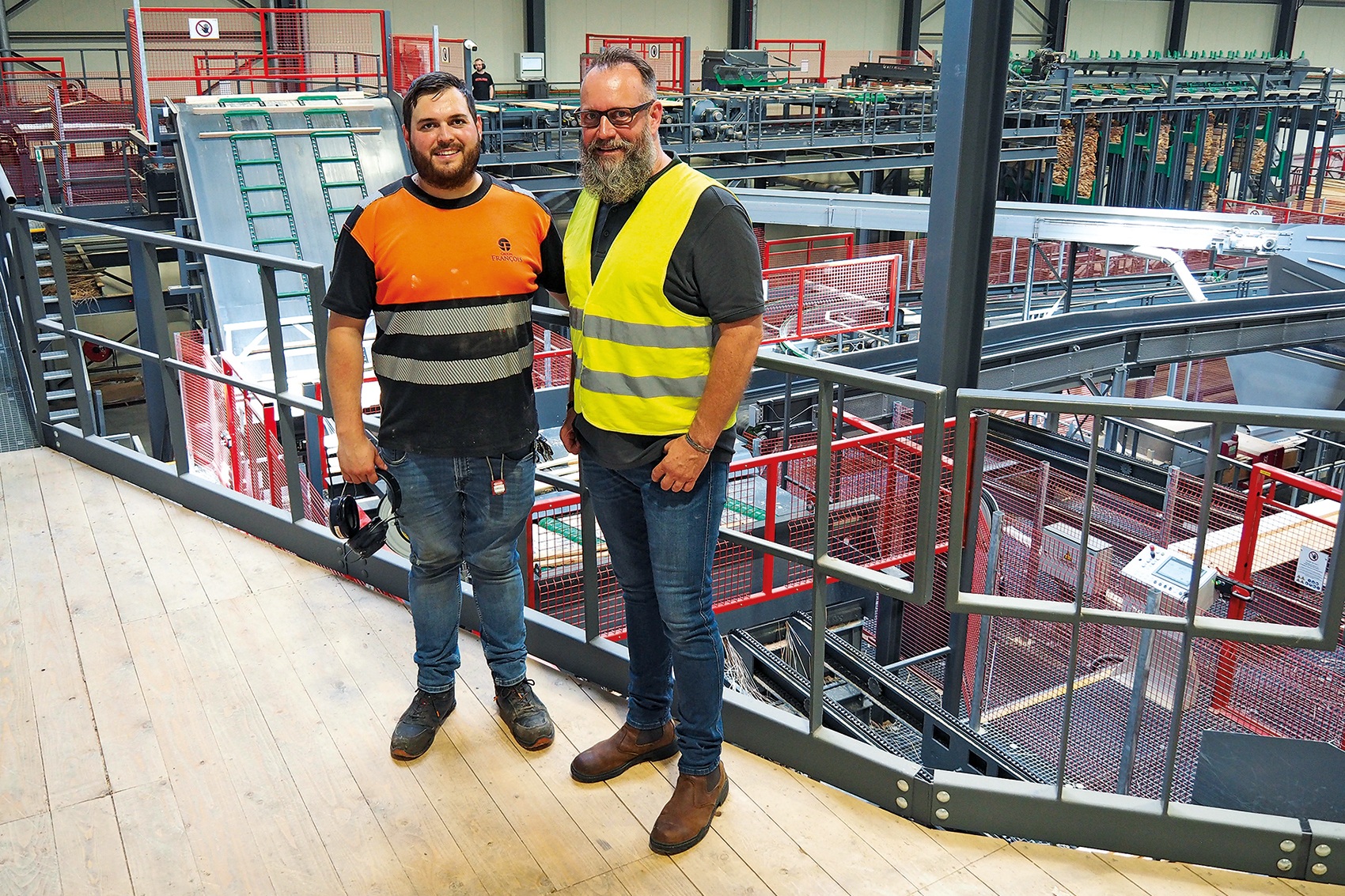
Showing the new sorting and stacking system from Kallfass: Groupe Franςois sawmill manager Nicolas Quoirin and Matthias Link from Kallfass (from left)

Flexible sorting

"Originally, only one line with box sorting and stacking was planned for the project. "However, since cutting pallet boards often produces identical dimensions, Groupe François decided to install a separate stacking system for the timber from the NKU resaw", explains Matthias Link, project manager at Kallfass. "This system is now the main line. However, if there are any faults or maintenance is necessary, we can move the goods to the second sorting line. "This makes us very flexible and allows us to minimise downtime", Quoirin emphasises as the main advantage. The corresponding information regarding which timber goes to which line comes from the EWD control system.

Kallfass Sortierwerk Zuführung

The sawn timber from the saw line is distributed across two Kallfass systems

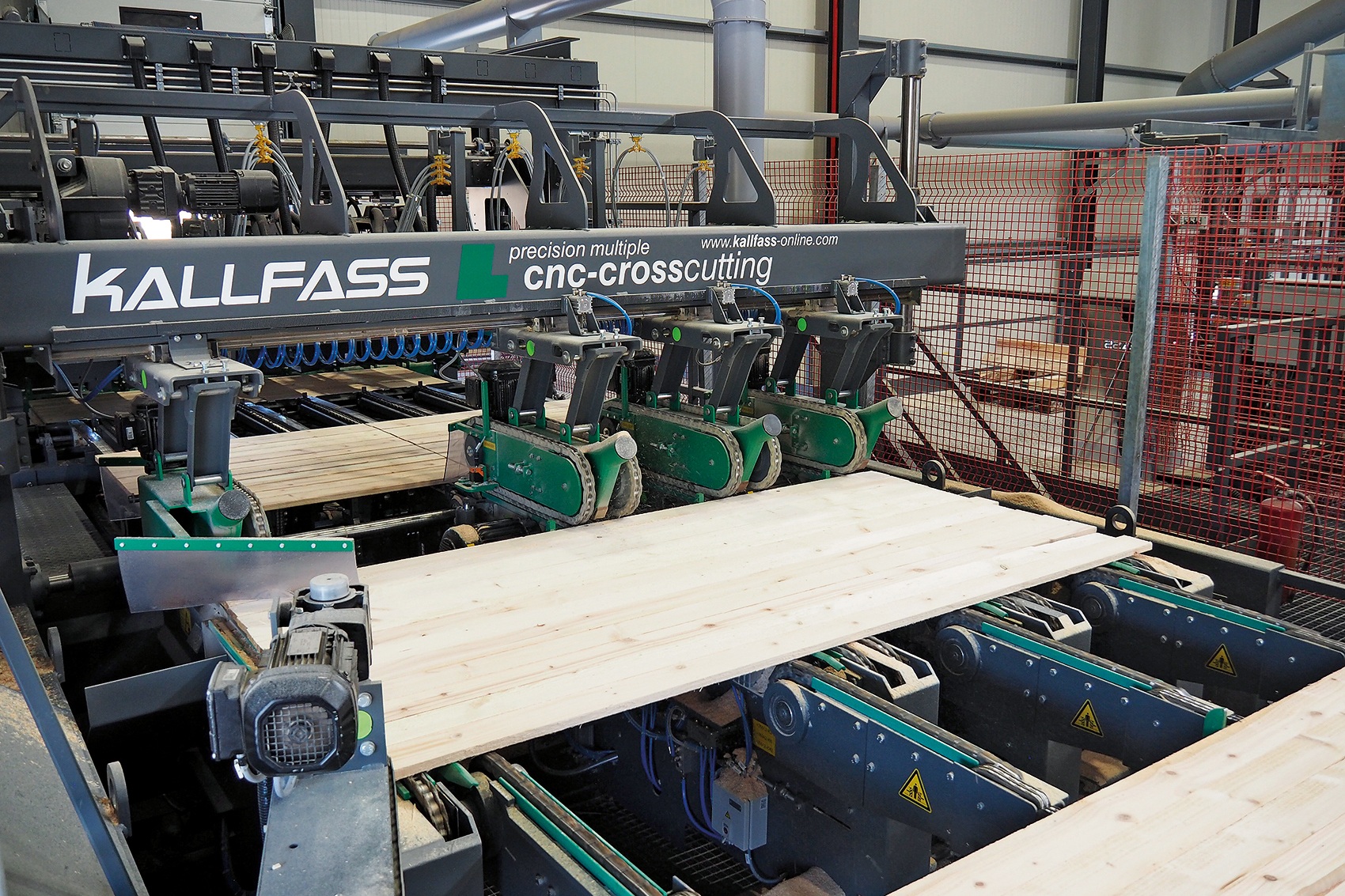
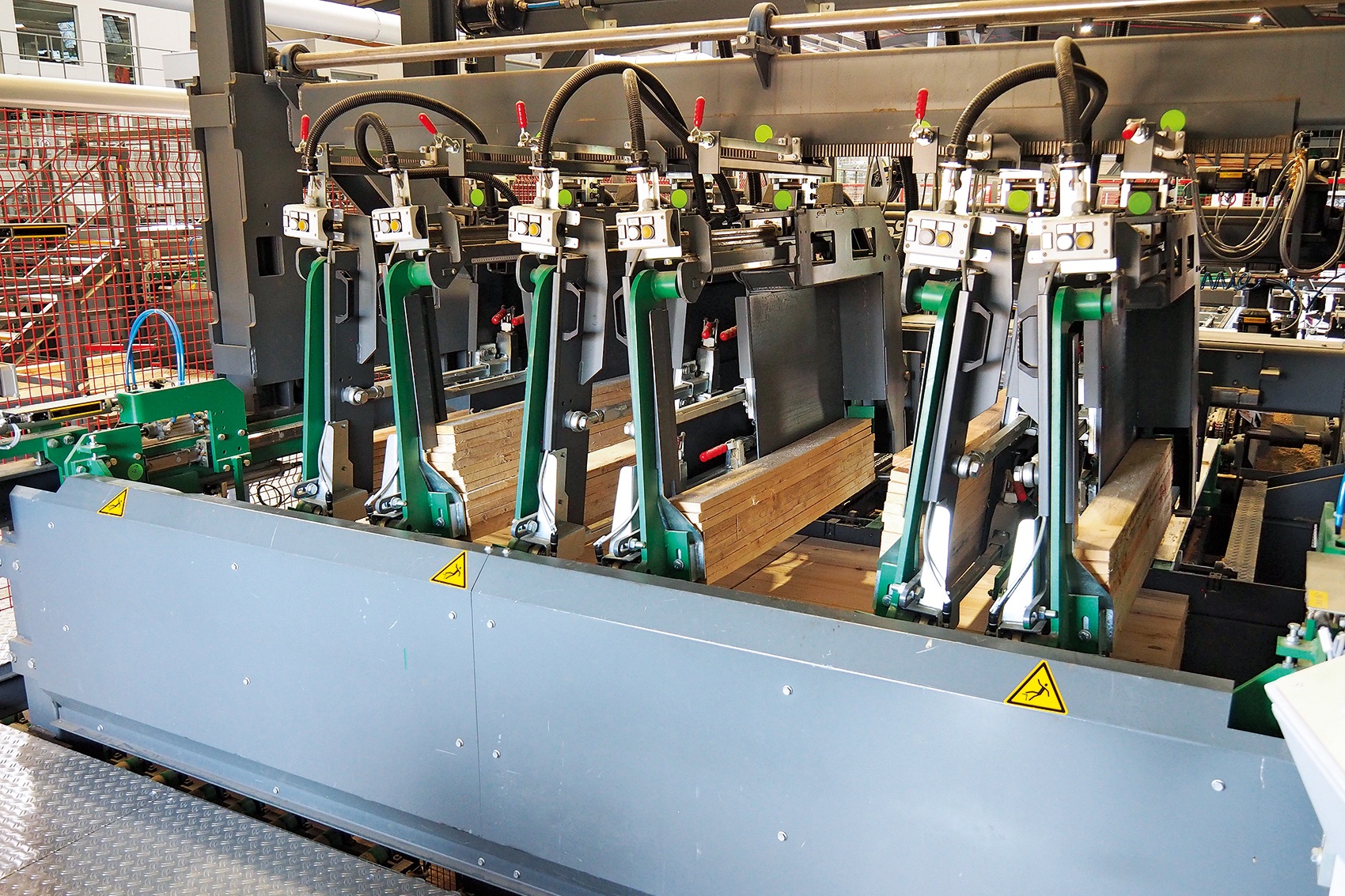
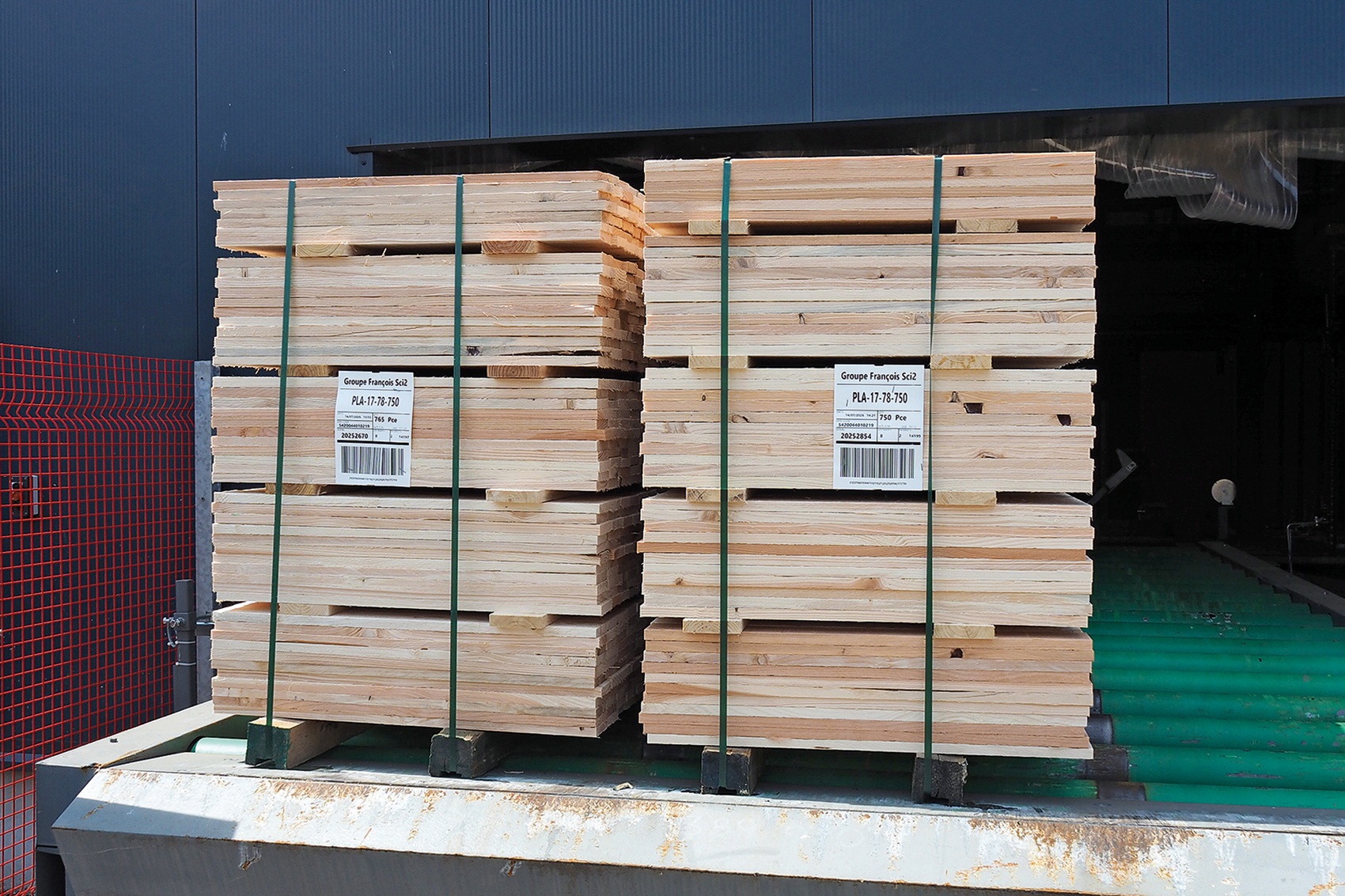
The standard material with a cross-section ranging from a minimum of 12 x 60 mm and a length of 2.1 to 2.5 m is drawn off to the left by the Kallfass handling system, transported across a long buffer section, and fed to the alignment roller conveyor. This is followed by layer creation. With the tried-and-tested multiple cross-cut saw from Kallfass, the goods can be cut to the desired length. The system is equipped with a fixed saw and three flexibly adjustable units. The downstream stacker with a capacity of up to 14 layers per minute has six magazines, which are manually filled with boards by the employees. The finished stacks descend via a hoisting unit onto a roller conveyor and are then strapped before being made available for transport.

Kallfass Mehrfachablängsäge

Proven multiple cross-cut saw from Kallfass with four saw aggregates – three units are variably adjustable

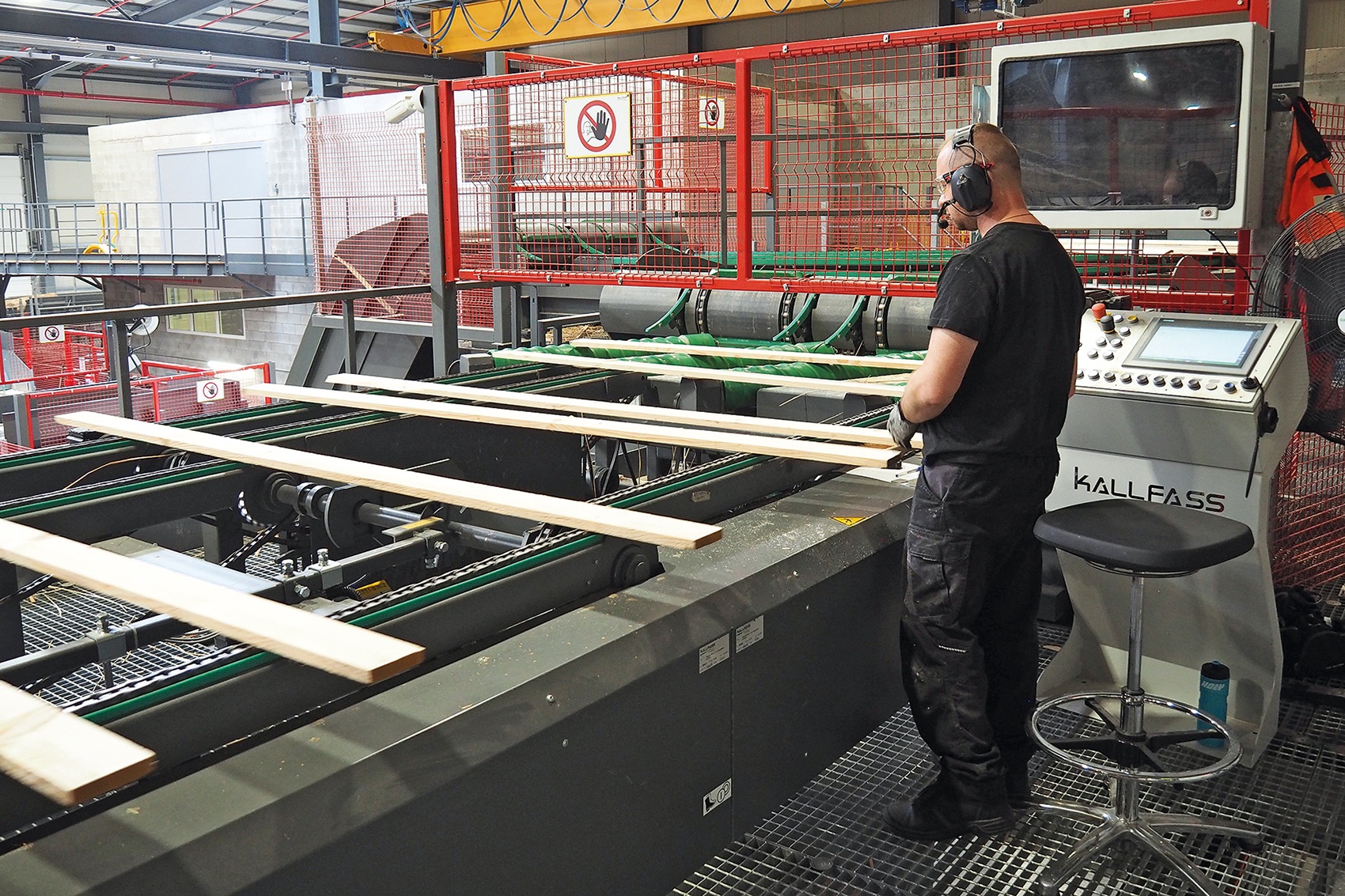
The sawn timber from the edger and resaw circular saw goes to the second Kallfass line. There, the boards are first separated. The operator assesses the quality and can, if necessary, reject individual pieces towards the disposal system. The following tong loader feeds the boards into the carrier conveyor. They are then measured in transverse flow. A scanner determines the wane. Based on these data, they are sorted into one of the ten boxes.

Kallfass Senkrechtboxen-Sortierwerk

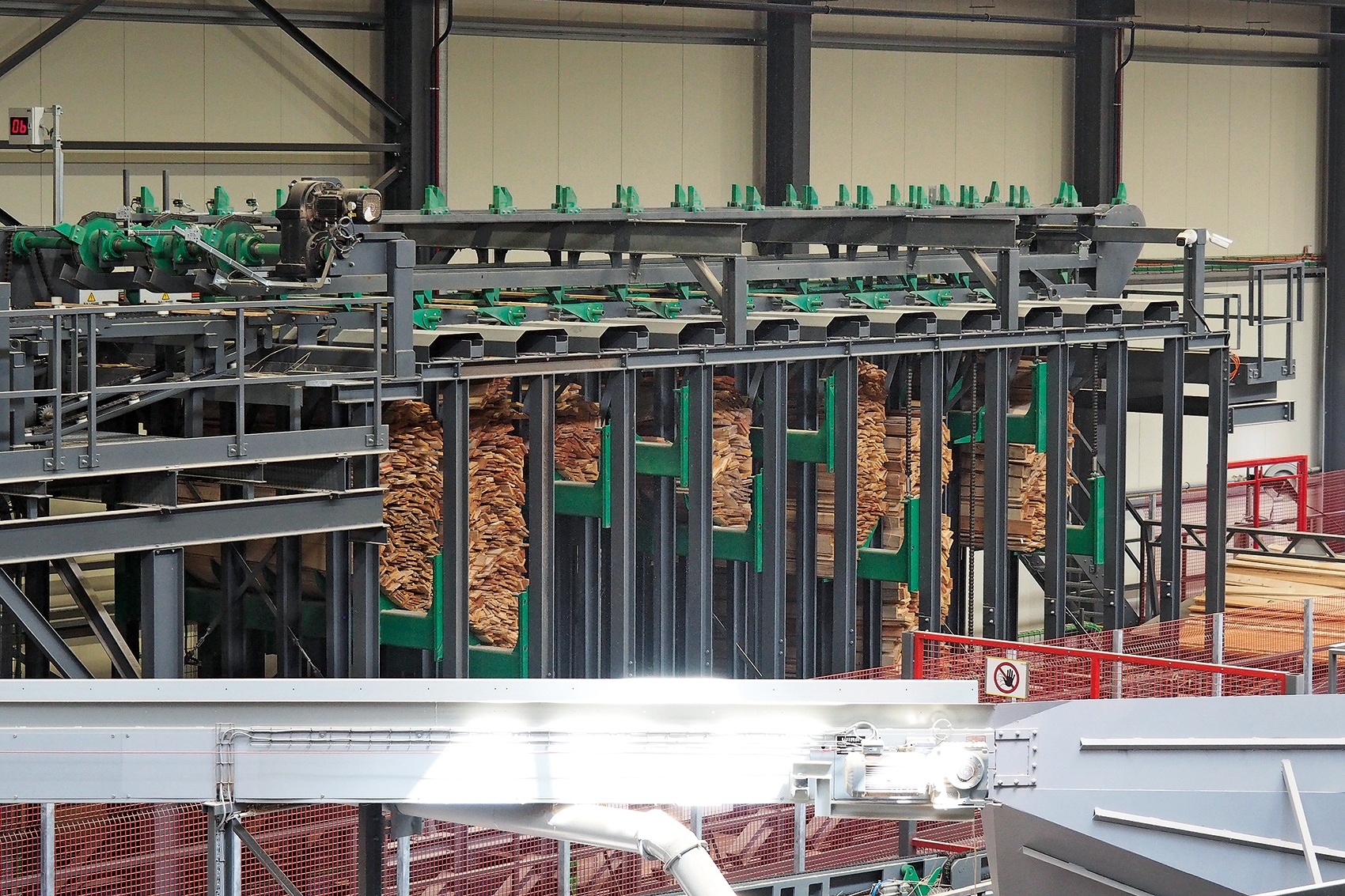
Kallfass supplied a ten-box sorting system for line 2 at Groupe François

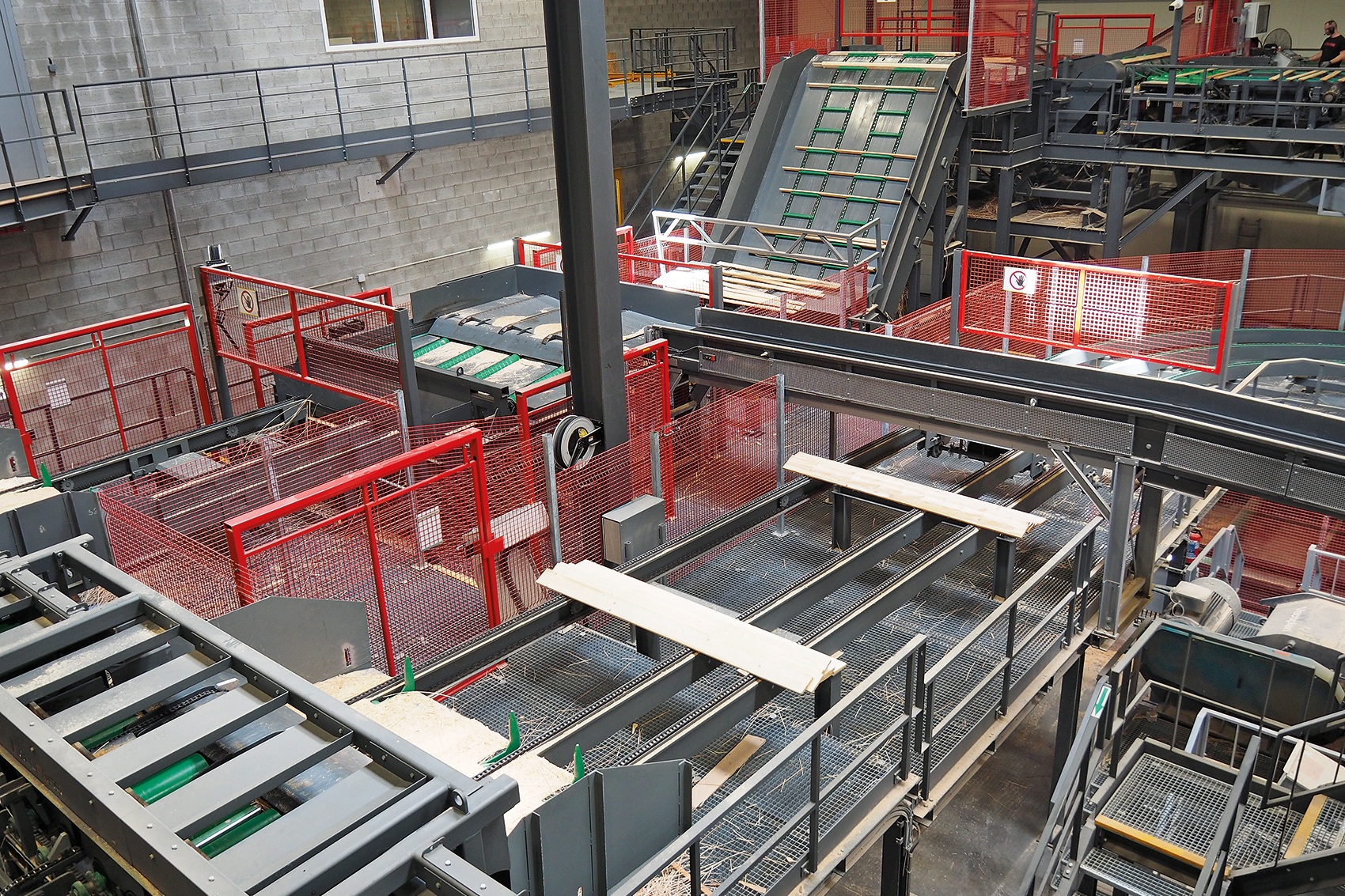
Once a box has reached the necessary fill level, it is emptied downwards. The conveyor brings the boards to a step separator and an unscrambler. Here, too, an employee checks the goods before the layers are created. Identical to the main line, Kallfass also installed a multiple cross-cut saw with four sawing units in this system. "All saw aggregates can also be swivelled down. The minimum cutting length is 600 mm", points out the Kallfass project manager points during the site tour. After passing through the stacking system – which is of identical design – the finished stacks reach a second strapping station and finally proceed to the discharge roller conveyor. The stacks can also be routed flexibly to either strapping unit in the event of a system failure. Both Kallfass systems are operated by just three employees, as Quoirin emphasises.

Kallfass Qualitätsbeurteilung

An employee assesses the timber, after which it moves on to sorting

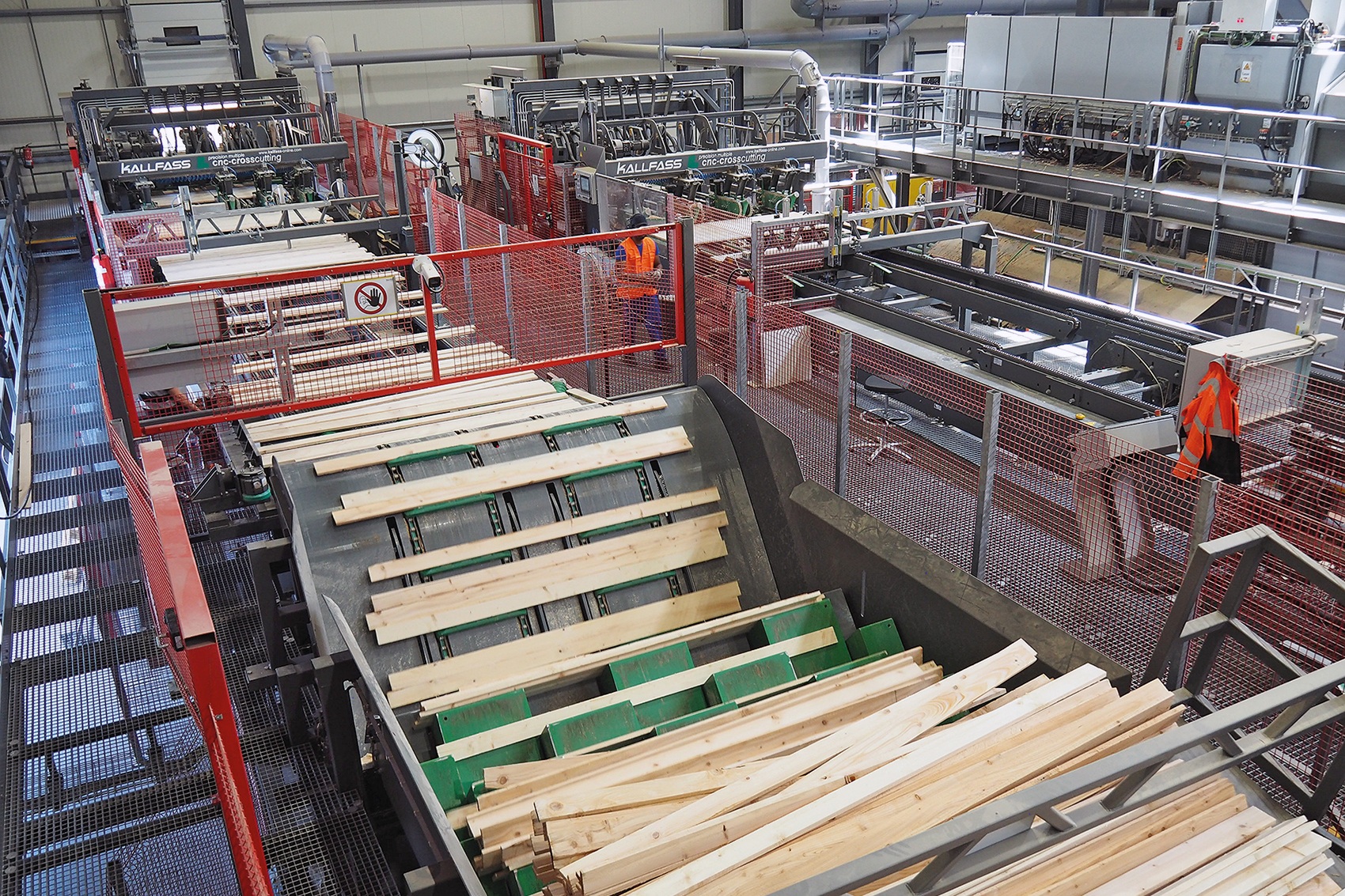
Kallfass Sortier- und Stapelwerk

View of the systems running in parallel: In the foreground, the step separator following box sorting; on the right, the main line

Kallfass Brettmagazine

The stacking systems are equipped with automatic double magazines for boards

Kallfass stacked timber packs

The finished sawn timber packages are placed on the roller conveyor ready for removal.

Text and pictures: Martina Nöstler, Holzkurier

Holzkurier 34/2026